
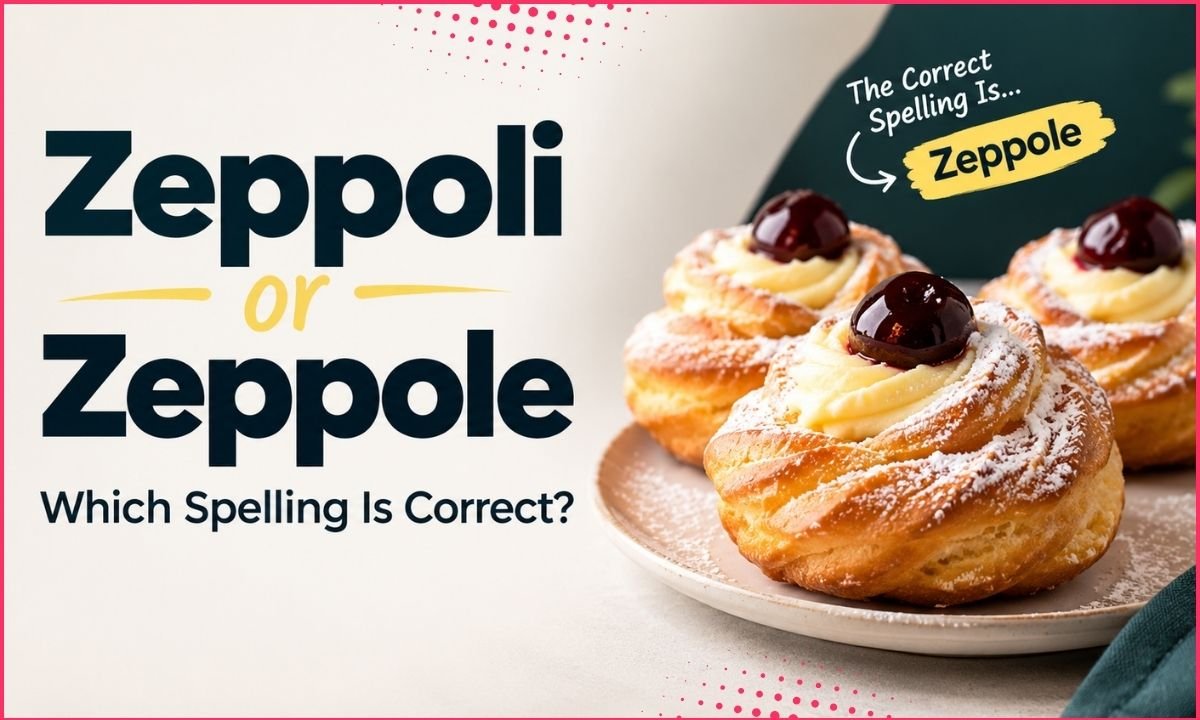
Zeppole is the correct Italian spelling. It is the plural of zeppola, a fried or baked dough pastry from southern Italy. Zeppoli is a common variant in the United States, but it is not the standard Italian form.
Many Americans use both spellings for the same dessert. Restaurants such as Olive Garden use “zeppoli” on their menus. Bakeries and Italian families often write “zeppole.” Both refer to fried dough treats, usually dusted with powdered sugar.
What Is a Zeppole?
A zeppola is a small Italian pastry made from dough that is fried or baked. It is usually sweet. It is often served with powdered sugar, honey, custard, or cream.
The word has a few related meanings, so it helps to separate them:
- Zeppole di San Giuseppe: A choux pastry ring, either fried or baked, filled with pastry cream and topped with a sour cherry. It is traditional for St. Joseph’s Day on March 19.
- Fried dough balls: Simple puffs of yeast dough, often made at Christmas and for festivals. They are rolled in sugar or drizzled with honey.
- Calabrian zeppole: A regional style made with potatoes in the dough. Some versions are sweet, and some are savory.
- Restaurant zeppoli: Bite-sized fried dough served as dessert in American Italian restaurants, usually with dipping sauces.
All of these share a core idea: dough that is cooked in a way that makes it light and puffy.
Read More: Publically or Publicly
Zeppoli or Zeppole: The Spelling Difference
In Italian, zeppola is a feminine noun. Italian feminine nouns ending in “a” usually take “e” in the plural. So the plural is zeppole, not zeppoli. The ending “i” is normally used for masculine plurals.
So why do people write zeppoli? There are a few reasons:
- Italian American families often spoke southern dialects, where final vowels sound softer or different.
- Some businesses chose “zeppoli” as a brand spelling.
- English speakers hear the final vowel as “ee” and spell it that way.
| Spelling | Status | Where you see it |
| Zeppola | Standard Italian singular | Dictionaries, Italian bakeries |
| Zeppole | Standard Italian plural | Recipes, menus, St. Joseph’s Day |
| Zeppoli | Variant or brand spelling | Restaurant menus, informal writing |
💡 Tip: If you want the traditional spelling, use zeppole. If you are naming a specific restaurant or menu item, copy that business’s spelling.
Zeppole as a Singular or Plural in English
In Italian, zeppola is one and zeppole is more than one. In English, speakers often say “a zeppole” for a single pastry. This is common in American usage, though it is not correct Italian.
English speakers also add an “s” and say “zeppoles.” Dictionaries may list more than one accepted form, so the right choice depends on your audience.
- Formal or Italian-focused writing: one zeppola, two zeppole.
- Casual American writing: one zeppole, two zeppoles is widely understood.
Both approaches are common. Just stay consistent within one piece of writing.
Part of Speech and Grammar
Zeppola is a noun. In Italian it is feminine. Its plural is zeppole. The small form is zeppolina, and the plural of that is zeppoline. That is the answer to “zeppoline, what is it?”: a little zeppola.
Here are two natural examples:
- “We ate zeppole on St. Joseph’s Day.”
- “The bakery sells one zeppola with cream and one with powdered sugar.”
How to Pronounce Zeppole
In standard Italian, zeppole sounds like ZEP-poh-leh. The “pp” is held slightly longer, and the final “e” sounds like the “e” in “bet.”
American speakers often say it a few different ways:
- ZEP-oh-lay: for zeppole
- ZEP-oh-lee: for zeppoli
- zeh-POH-lee: in some regional or family usage
The stress is usually on the first syllable. Some Italian American families drop the final vowel, so you may hear “zeh-POHL” or similar. Regional pronunciation varies, so none of these is wrong in the setting where it is spoken.
Origin of the Word and the Pastry
Zeppole are strongly linked to Naples and the Campania region of southern Italy. Fried dough has a long history in Italian cooking, and zeppole belong to that tradition.
The exact origin of the word is not settled. Some sources suggest it may relate to older Latin or Neapolitan terms. Because experts do not fully agree, it is safest to say the etymology is uncertain.
The pastry is closely tied to St. Joseph’s Day. In Italy, March 19 is also Father’s Day, and zeppole are a traditional sweet for the occasion. A popular folk story says St. Joseph sold fried dough to support the Holy Family during their time in Egypt. That is a tradition, not a documented historical fact.
The filled St. Joseph’s Day version is often credited to Neapolitan pastry makers in the 1800s. Different sources give slightly different accounts, so treat specific names and dates with care.
Read More: Bareable or Bearable
Types of Zeppole
Zeppole di San Giuseppe
This is the most famous version. It uses choux pastry, the same kind used for cream puffs. It may be fried or baked, then filled with custard, topped with a cherry, and dusted with sugar.
Fried Yeast Dough Zeppole
This is the simple kind many families make at home. The dough is mixed, rested, and fried until golden. It is then sugared or drizzled with honey.
Zeppole with Ricotta
Some recipes mix ricotta into the batter for a softer center. Ricotta can also be used as a filling. The result is lighter and slightly creamy.
Calabrian Zeppole with Potatoes
In Calabria, potatoes are often added to the dough. This gives a tender texture. Some versions are savory and may include ingredients such as anchovies, while others are sweet.
Pizza Dough Zeppole
In many Italian American homes, leftover pizza dough is fried into puffs. They are served with sugar or sometimes with savory toppings. This is why you may see searches like “zeppole pizza.”
Zeppole vs Sfingi
People often ask about the difference between sfingi and zeppole. They are related, and the lines between them blur depending on region and family.
| Pastry | Typical region | Common description |
| Zeppole | Naples and Campania | Choux or yeast dough, often filled with custard and topped with a cherry |
| Sfingi (sfinci) | Sicily | Fried dough puffs, often topped with sweet ricotta cream, orange peel, or pistachios |
Both are popular for St. Joseph’s Day. In some places the names are used almost interchangeably. If you are ordering, check the description.
Zeppoli at Olive Garden
Olive Garden spells the dessert “zeppoli.” It is made of fried dough bites dusted with powdered sugar, served with dipping sauces. Menus and recipes change over time, so check the restaurant’s current menu before you go.
This version is different from the traditional filled St. Joseph’s Day pastry. It is closer to a fried dough bite.
Basic Zeppole Ingredients
Most zeppole recipes use simple pantry ingredients. Exact amounts depend on the style.
- Flour
- Water or milk
- Eggs (for choux style) or yeast (for fried dough style)
- Butter or oil
- Sugar and salt
- Oil for frying
- Powdered sugar, honey, or custard for finishing
For a basic fried version, you mix a soft dough, let it rise, drop small pieces into hot oil, and fry until golden. Drain them on paper towels and dust with sugar while still warm. For the choux version, you cook flour into a paste on the stove, beat in eggs, pipe the dough into rings, then fry or bake. Fill and top once cooled.
⚠️ Common mistake: Frying at the wrong oil temperature. Oil that is too cool makes greasy zeppole, and oil that is too hot browns the outside before the inside cooks.
Finding Zeppole Near You
For “zeppole near me” searches, a few places usually carry them:
- Italian bakeries and pastry shops, especially around St. Joseph’s Day
- Italian restaurants with dessert menus
- Local Italian feasts and street fairs
- Specialty grocers with prepared desserts
Some restaurants use the name too. Zeppoli in Collingswood, New Jersey, and Zeppole Italian Restaurant at Gaylord Texan are examples of businesses using these names. Hours, menus, and offerings change, so check their official pages or recent reviews.
Read More: Ate or Eaten
Common Mistakes
Mixing up singular and plural
❌ Incorrect: “I ate three zeppola.”
✅ Correct: “I ate three zeppole.”
In Italian, zeppola is one and zeppole is plural.
Assuming zeppoli is standard Italian
❌ Incorrect: “Zeppoli is the Italian plural of zeppola.”
✅ Correct: “Zeppole is the Italian plural. Zeppoli is a common variant.”
Treating all zeppole as the same dessert
❌ Incorrect: “Zeppole are always filled cream puffs.”
✅ Correct: “Zeppole can be filled choux pastry or simple fried dough, depending on region and family.”
Related Words
| Word | Meaning | Difference |
| Sfinge | Sicilian fried or baked pastry | Often topped with ricotta cream |
| Zeppolina | Small zeppola | A diminutive form |
| Bombolone | Italian filled doughnut | Usually larger and filled |
| Beignet | French fried dough | Similar idea, different cuisine |
| Fried dough | General English term | Not specific to Italian cooking |
Frequently Asked Questions
Is it zeppoli or zeppole?
Zeppole is the standard Italian plural. Zeppoli is a variant used in the United States, especially on some menus.
What is a zeppole?
It is an Italian pastry made from fried or baked dough. It is often dusted with sugar or filled with cream.
What does zeppole mean in English?
There is no exact English translation. It is usually described as an Italian fried dough pastry or Italian doughnut.
Is zeppole singular or plural?
In Italian, zeppole is plural and zeppola is singular. In casual English, people often use zeppole for both.
How do you pronounce zeppole?
In Italian, it sounds like ZEP-poh-leh. Many Americans say ZEP-oh-lay.
What are zeppole di San Giuseppe?
They are choux pastry rings filled with custard and topped with a cherry. They are eaten for St. Joseph’s Day on March 19.
What is the difference between sfingi and zeppole?
Sfingi are Sicilian and often topped with ricotta cream. Zeppole are tied to Naples and often use choux pastry with custard. The names sometimes overlap in practice.
Are zeppole a dessert or a snack?
Most are dessert, but some savory versions exist, especially in Calabria.
Conclusion
The correct Italian spelling is zeppole, the plural of zeppola. Zeppoli is a common American variant seen on menus and in casual writing. Both names point to the same idea: light, puffy dough that is fried or baked and finished with sugar, honey, or cream.
When you write about the pastry, choose the spelling that fits your audience. Use zeppole for traditional or Italian-focused content, and zeppoli when naming a specific restaurant or menu item. Now when you see zeppoli or zeppole on a menu, you will know what you are getting and why the spelling changes.

Danish Raza is the author of Grammavio, a trusted resource for simple and easy-to-understand English grammar guides. He creates helpful content covering grammar rules, word meanings, vocabulary, and common grammar mistakes to help readers improve their English skills.